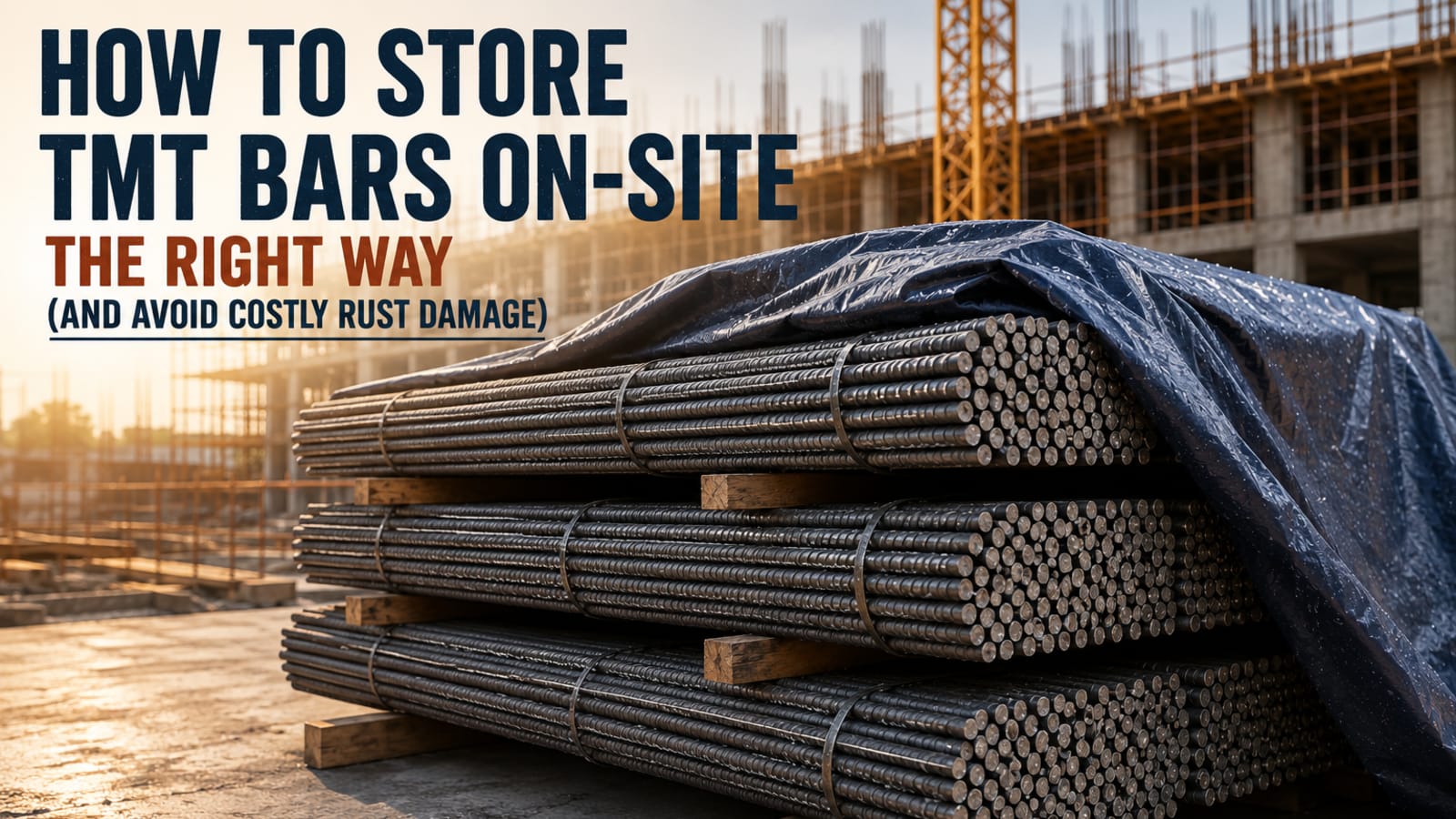
It's a scenario that plays out on construction sites more often than it should: perfectly good TMT bars, sourced from a reliable supplier, end up rusting or bending simply because of how they were stored after delivery. Steel doesn't need long-term neglect to start corroding — exposure to moisture and oxygen can begin the process even before the bars are installed, sometimes within weeks of poor storage. The good news is that preventing this is entirely within a site team's control, and it doesn't take much beyond a bit of planning and discipline.
Why Storage Matters More Than People Assume
Iron and steel corrode naturally when exposed to moisture and oxygen over time — that part isn't unique to TMT bars. What is worth understanding is that this process can start well before the bars are ever used in construction, right at the storage stage on-site. Common culprits include bars left in open areas without shelter during rain or humid weather, direct contact with damp or saline soil, and prolonged storage periods before use. The consequences aren't just cosmetic: surface rust that goes unaddressed can eventually compromise the bar's bonding with concrete and its load-carrying performance, which is a structural issue, not just an appearance one.
Choose the Right Storage Location
Start with the basics: TMT bars should be stored in a dry, shaded, and well-ventilated area, away from standing water or areas prone to waterlogging during rain. If a covered storage shed isn't available, a tarpaulin or waterproof sheet over the stack is the minimum protection needed, especially during monsoon months.
Elevate the Bars Off the Ground
This is one of the simplest and most effective steps, and it's frequently skipped. Bars placed directly on soil pick up ground moisture, which accelerates rusting from the point of contact outward. Elevating bars at least a few inches off the ground — using wooden pallets, concrete blocks, or purpose-built racks — creates an air gap that keeps ground moisture away from the steel.
Stack and Handle Bars Correctly
How bars are stacked affects both corrosion risk and physical damage:
Stack horizontally on a stable, level base to avoid bending or deformation, particularly for thinner bars that flex more easily.
Match your handling to bar size — smaller diameter bars (6mm–12mm) are usually bundled and tied, medium bars (16mm–20mm) need even, stable stacking to avoid twisting, and larger bars (25mm and above) need solid support underneath and shouldn't have heavy loads stacked on top.
Avoid rough handling during loading and unloading — dropping or dragging bars can damage the surface (including any protective coating) and cause bends that compromise the bar's straightness.
Follow a First-In-First-Out System
Bars that sit in storage the longest have the most time to be exposed to moisture and humidity, so it helps to organize stock so that older deliveries get used before newer ones — a simple first-in-first-out approach. This also has a practical side benefit: it keeps your site organized and makes it easier for workers to find the right bar size when they need it, rather than digging through a disorganized pile.
Inspect Before Use — Every Time
Even with good storage practices, it's worth inspecting bars before they go into construction, particularly if they've been on-site for more than a few weeks. Light surface rust can often be cleaned off with a wire brush without affecting the bar's integrity. Deeper rusting or pitting, however, is a different story — bars with significant corrosion damage shouldn't be used for structural work, since the compromised surface can affect both strength and bonding with concrete.
A Word on Coated Bars
If you're using corrosion-resistant or coated variants (such as epoxy-coated bars), the same storage principles apply — good storage isn't a substitute for coating, and coating isn't a substitute for good storage. Handle coated bars carefully to avoid scratching or chipping the coating during transport and stacking, since damage to the coating creates a point where corrosion can start regardless of the bar's overall corrosion resistance.
Final Word
None of this requires specialized equipment or major expense — a shaded storage area, some elevation off the ground, careful stacking, and a habit of inspecting bars before use will prevent the vast majority of on-site corrosion and handling damage. It's a small operational discipline that protects a fairly significant material investment.
At Baheti Steel Traders, we're happy to advise on storage and handling for large orders, especially for sites in humid or coastal-adjacent parts of Hyderabad where the risk is higher.