PRIMARY VS SECONDARY STEEL: COMPLETE COMPARISON GUIDE FOR CONSTRUCTION
When you're planning a construction project, one of the most critical decisions you'll make is choosing the right steel for your reinforcement needs. Yet many builders, contractors, and homeowners face confusion between two commonly available options: primary steel and secondary steel.
Both types are used in construction projects across India and worldwide, but they differ significantly in their manufacturing processes, quality consistency, cost, and best-use applications. Making the wrong choice can impact your project's structural integrity, maintenance costs, and long-term durability.
In this comprehensive guide, we'll break down the differences between primary and secondary steel, explain when to use each type, help you understand the quality implications, and provide practical advice for making the right choice for your specific construction needs.
UNDERSTANDING STEEL TYPES IN CONSTRUCTION
Before diving into the specific differences, it's important to understand that both primary and secondary steel serve the construction industry. The distinction lies in their origin, manufacturing process, and the quality assurance mechanisms that surround them.
Steel is one of the most recyclable materials on earth, which is why secondary steel exists and why it plays an important role in sustainable construction. However, this recycled nature also means that quality control and material consistency become more critical when evaluating secondary steel options.
WHAT IS PRIMARY STEEL?
Primary steel, also known as virgin steel or first-generation steel, is manufactured directly from iron ore in large integrated steel plants using advanced, controlled processes. This is the traditional method of steel production, where raw materials are transformed into finished steel products through standardized industrial procedures.
MANUFACTURING PROCESS OF PRIMARY STEEL
The production of primary steel is a sophisticated process that involves multiple stages and rigorous quality control:
1. Mining Raw Materials: Iron ore is extracted from mines, along with limestone and coal, which serve as essential inputs.
2. Blast Furnace Processing: Raw materials are combined in blast furnaces at extreme temperatures (1600°C+) to extract iron from ore.
3. Basic Oxygen Furnace (BOF): The raw iron is refined in a Basic Oxygen Furnace where impurities are removed and the chemical composition is carefully controlled.
4. Casting and Cooling: The molten steel is cast into ingots or billets and cooled in a controlled environment.
5. Hot Rolling: The billets are heated and passed through rolling mills to form the final steel bars with precise dimensions.
6. Quality Testing: Every batch undergoes rigorous testing including tensile strength tests, bend tests, and chemical composition analysis.
This sophisticated process results in steel with exceptional consistency and reliability. Understanding this manufacturing method helps explain why primary steel commands a premium price and why it's the preferred choice for critical infrastructure.
KEY CHARACTERISTICS OF PRIMARY STEEL
• Produced from virgin iron ore in integrated steel plants
• Manufactured under strict, standardized procedures with advanced technology
• Typically ISI (Indian Standards Institute) certified with uniform quality standards
• Consistent chemical composition and mechanical properties
• Higher tensile strength and predictable performance
• Better weldability and reliability
• Traceability of material from origin to final product
• Premium pricing due to quality assurance and manufacturing standards
WHAT IS SECONDARY STEEL?
Secondary steel, also known as recycled steel or re-rolled steel, is manufactured by melting down scrap steel, demolition waste, or rejected material from primary steel production. This recycled material is then re-processed and re-rolled to create new steel bars and reinforcement products.
Secondary steel production is an important part of the circular economy in construction, as it diverts waste from landfills and reduces the need for raw material extraction. However, the quality of secondary steel can vary significantly depending on the source of the scrap and the manufacturing standards of the re-rolling mill.
MANUFACTURING PROCESS OF SECONDARY STEEL
The production of secondary steel is relatively simpler than primary steel, but quality control becomes increasingly important:
1. Scrap Collection: Steel scrap is collected from demolition sites, factories, and rejected batches from primary steel mills.
2. Sorting and Grading: The scrap is sorted by type and composition. This is critical because mixed scrap from different sources can have varying properties.
3. Melting (Induction Furnace): Scrap steel is melted in induction furnaces at high temperatures. These furnaces are smaller and less sophisticated than blast furnaces used in primary steel production.
4. Refining: The molten steel is refined to remove impurities, though the degree of refining varies by mill and manufacturer.
5. Casting: The refined steel is cast into billets using simpler casting methods than primary steel.
6. Re-rolling: Billets are heated and passed through rolling mills to create bars of desired sizes.
7. Testing (Variable): Testing may or may not be performed, depending on the manufacturer's commitment to quality standards.
KEY CHARACTERISTICS OF SECONDARY STEEL
• Made from recycled or re-rolled steel scrap
• Produced in smaller-scale induction or rolling mills
• May or may not carry ISI certification (depends on manufacturer)
• Variable quality consistency due to mixed scrap sources
• Lower production costs compared to primary steel
• Environmentally sustainable (recycled material)
• May have surface impurities or inconsistent dimensions
• Generally less predictable performance
• More economical pricing for budget-conscious projects
QUALITY CONSIDERATIONS: WHY IT MATTERS
The primary difference between primary and secondary steel that impacts your construction project is quality consistency and predictability. Here's why this matters:
STRENGTH VARIABILITY
Primary steel undergoes rigorous testing to ensure that every batch meets specified tensile strength requirements. Secondary steel, especially from unverified sources, may show batch-to-batch variations in strength, which can be problematic in high-stress applications.
WELDABILITY
If your project requires welding (common in commercial construction), primary steel's known composition makes welding more reliable. Secondary steel may have variable carbon content, making welding operations riskier and potentially requiring special welding procedures.
CORROSION RESISTANCE
Primary steel from controlled processes often has more uniform surface quality. Secondary steel may have impurities or surface defects that accelerate rusting, especially in humid or coastal environments. In coastal areas where salt air accelerates rust, primary steel with proper surface treatment offers better long-term corrosion resistance.
LONG-TERM DURABILITY
In 20-30 years, a structure built with inconsistent secondary steel may require costly repairs or reinforcement. The initial cost savings can be negated by maintenance expenses.
WHEN TO CHOOSE PRIMARY STEEL
Primary steel is the preferred choice for:
• High-rise buildings (8+ stories) where load requirements are significant
• Seismic zones where earthquake resistance is critical
• Infrastructure projects (bridges, highways, dams) built for 50+ year lifespans
• Commercial and industrial buildings with heavy machinery loads
• Projects in coastal areas where corrosion is a concern
• Projects requiring certified documentation for regulatory compliance
• Structures where welding or specialized connections are required
• Projects where builder reputation and structure warranty are important
WHEN TO CHOOSE SECONDARY STEEL
Secondary steel can be a viable choice for:
• Low-rise residential buildings (G+1 to G+3) with light load requirements
• Temporary structures or scaffolding
• Boundary walls and fencing
• Small commercial or agricultural structures
• Projects with strict budget constraints
• Renovation or repair work in non-critical areas
• Environmentally-focused projects prioritising recycled materials
COST COMPARISON ANALYSIS
The cost difference between primary and secondary steel typically ranges from 10-20%, depending on market conditions, location, and current scrap metal prices. However, focusing solely on the material cost can be misleading.
Consider the total project lifecycle:
PRIMARY STEEL PROJECTS:
✓ Higher initial material cost
✓ Lower maintenance costs
✓ Longer structural lifespan (50-100+ years)
✓ Better structural warranty
✓ Reduced repair/reinforcement costs
✓ Higher resale/property value
SECONDARY STEEL PROJECTS:
✓ Lower initial material cost (10-20% savings)
✓ Potential for higher maintenance costs
✓ Possible need for reinforcement after 20-30 years
✓ Shorter structural warranty (if any)
✓ Better for environmentally-conscious builders
✓ Good for temporary or short-lifespan structures
HOW TO ENSURE QUALITY: VERIFICATION CHECKLIST
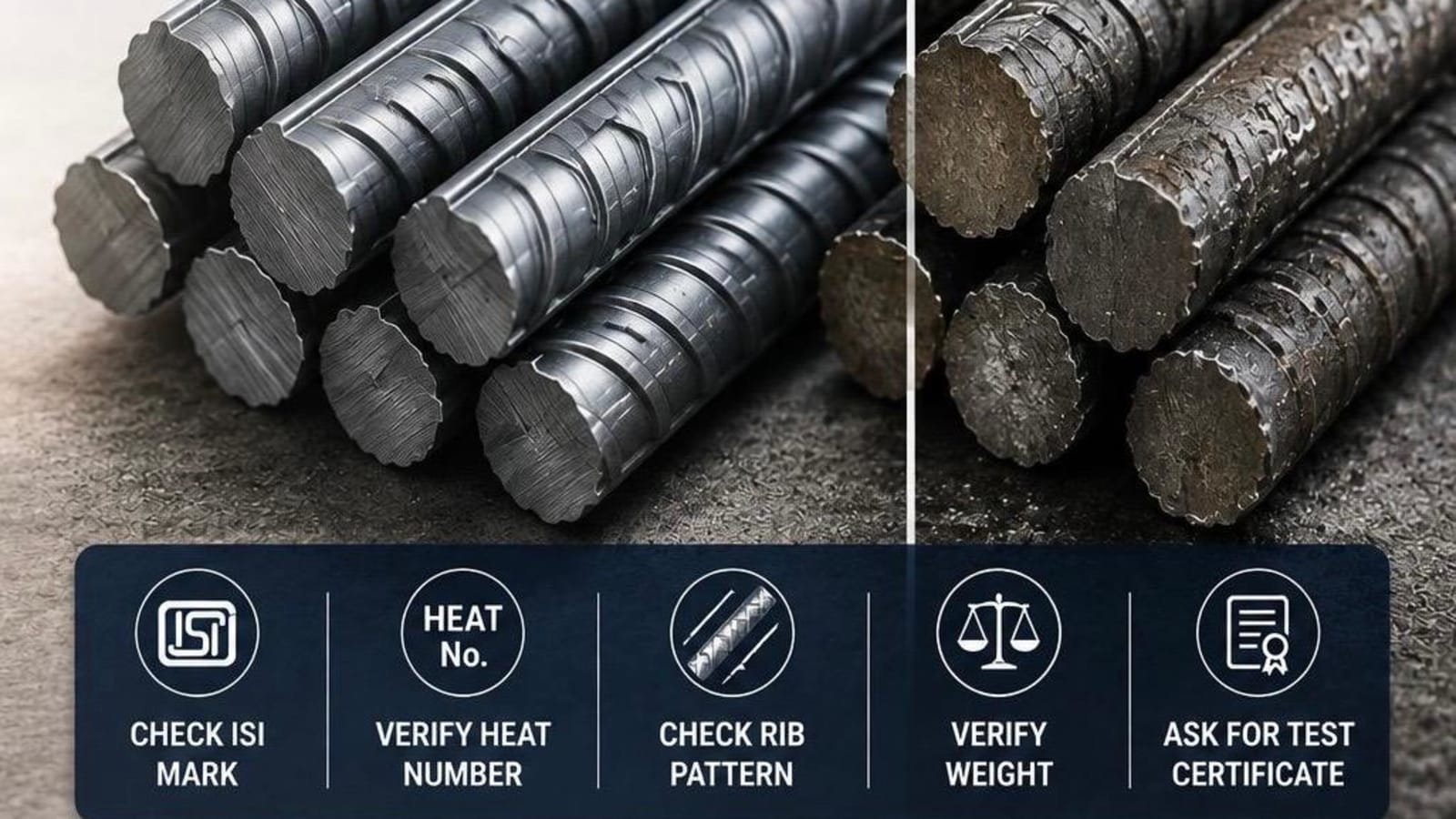
1. REQUEST MILL CERTIFICATES: Ask for original mill test certificates that confirm tensile strength and chemical composition.
2. VERIFY ISI MARK (IF REQUIRED): Check the ISI mark on the steel and verify authenticity through the Bureau of Indian Standards website.
3. INSPECT PHYSICAL QUALITY: Examine the steel for surface defects, rust, scoring, or bends before accepting delivery.
4. CHECK CONSISTENT DIMENSIONS: Verify that all bars have consistent diameter and straightness.
5. GET THIRD-PARTY TESTING: For critical projects, arrange independent lab testing of samples.
6. KNOW YOUR SUPPLIER: Work with established suppliers with proven reputation and verifiable customer reviews.
7. REQUEST BATCH DOCUMENTATION: Ask for documentation of which batch the material came from and its test results.
8. CLARIFY WARRANTY: Understand what warranty or guarantee the supplier is offering on the material.
CONCLUSION
The choice between primary and secondary steel should be based on your specific project requirements, budget constraints, location, and structural needs.
Primary steel excels in critical applications with superior quality consistency and long-term durability—making it the ideal choice for high-rise buildings, infrastructure projects, and applications where structural integrity is paramount.
Secondary steel offers cost-effective, environmentally sustainable solutions for appropriate applications when properly sourced from certified manufacturers. For low-rise residential buildings, boundary walls, and budget-conscious projects, secondary steel can deliver excellent value.
The most important factor is not just the steel type, but the quality of the specific product you purchase. Always verify certifications, request mill test certificates, inspect physical quality, and work with reputable suppliers.
By understanding the differences outlined in this guide, you're now equipped to make an informed decision that balances cost, quality, environmental impact, and long-term value for your construction project.
At Baheti Steel Traders, we supply both high-quality primary and secondary steel reinforcement bars, all sourced from certified manufacturers and verified for strength and durability. Whether you're building a high-rise commercial complex or a budget-conscious residential project, we can help you choose the right material for your needs.
With over 55+ years of trusted service in Hyderabad and Telangana, Baheti Steel Traders is known for:
✓ Fair weighment and accurate measurements
✓ Quality-certified steel from top manufacturers
✓ Competitive market pricing
✓ Expert consultation on material selection
✓ Reliable delivery to your construction site