Steel and moisture don't get along — and reinforcement steel embedded inside concrete is no exception. Over time, especially in certain environments, standard TMT bars can corrode, and when reinforcement corrodes, it expands, cracks the surrounding concrete, and weakens the entire structural member. This is where CRS (Corrosion Resistant Steel) TMT bars come in — a variant designed specifically to resist this process. But CRS bars cost more, and not every project needs them. Here's how to think it through properly.
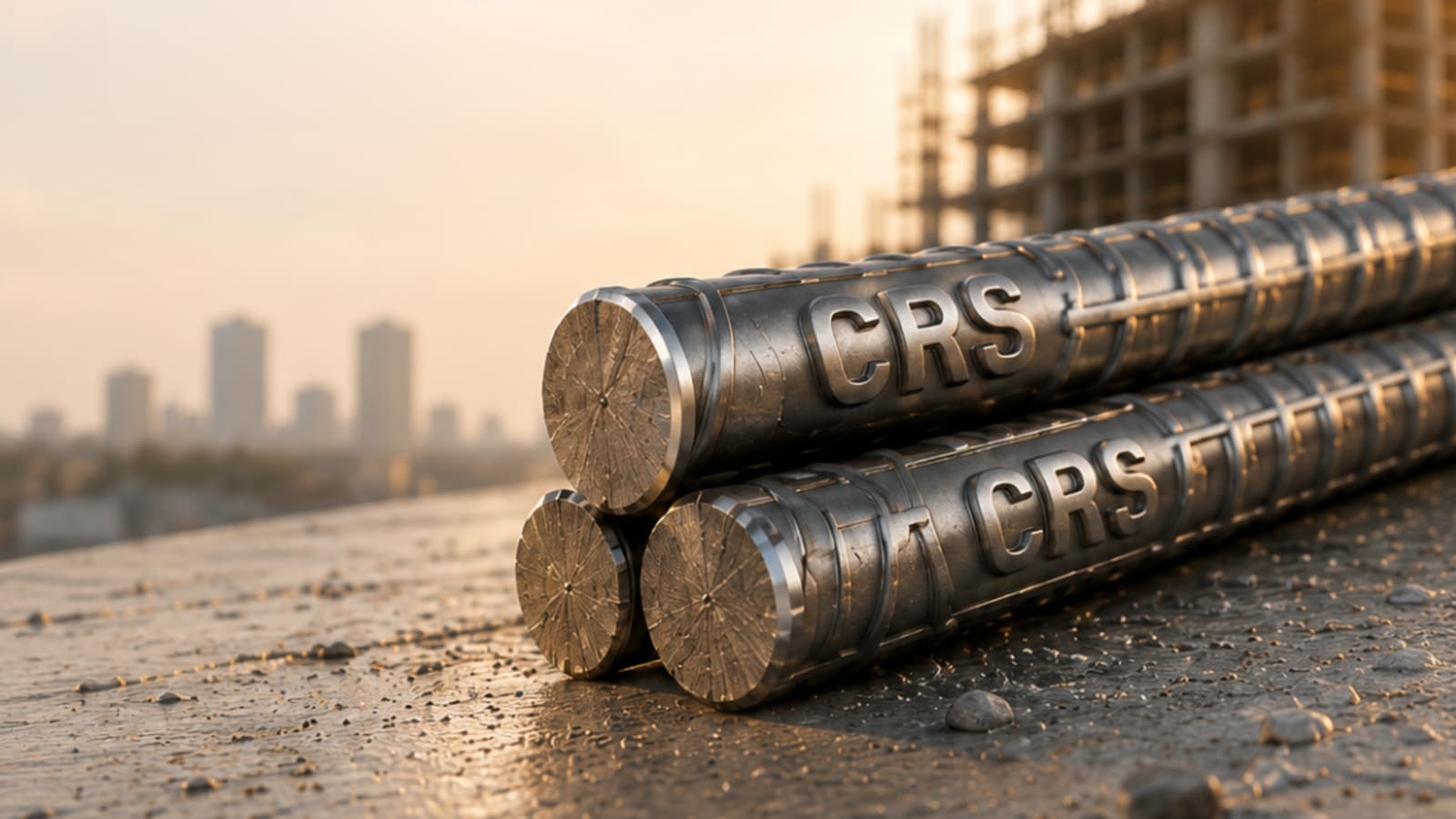
What Makes CRS Steel Different
Standard TMT bars (Fe500, Fe550, Fe600) are alloyed primarily for strength and ductility. CRS bars start from the same base but add specific alloying elements — typically copper, chromium, and phosphorus — in controlled proportions. These elements slow down the electrochemical process that causes steel to rust, particularly in the presence of chlorides (from sea air or de-icing salts) or sulphates (from industrial pollution and certain soil types).
It's important to understand that CRS bars don't make steel "rust-proof" — nothing does. What they do is meaningfully slow the corrosion rate, extending the effective service life of the reinforcement, particularly in aggressive environments.
How Corrosion Actually Damages a Structure
It helps to understand why this matters structurally, not just cosmetically. When steel corrodes, iron oxide (rust) forms — and rust occupies significantly more volume than the original steel. As this expansion happens inside the concrete, it creates internal pressure that cracks and eventually spalls (breaks off) the surrounding concrete cover. Once concrete cover is compromised, moisture and air reach the steel even faster, accelerating the problem. Left unaddressed, this cycle can seriously compromise a structure's load-bearing capacity over years — which is why corrosion protection is a design decision, not an afterthought.
Where CRS Bars Make Sense
Coastal construction: Salt-laden air is one of the most aggressive corrosion accelerants for reinforced concrete. Any construction within a few kilometres of the coast should seriously consider CRS bars, particularly for exposed structural elements.
Industrial and chemical exposure zones: Factories, chemical plants, and structures near industrial pollution sources face elevated sulphate and chloride exposure through the air and sometimes through groundwater.
High-moisture structures: Basements, water tanks, retaining walls, and any structure with persistent dampness or water contact are higher-risk environments for corrosion, even away from the coast.
Long-design-life infrastructure: Bridges, dams, flyovers, and other infrastructure meant to last many decades often specify CRS as standard, since the cost of repair or reinforcement replacement later is far higher than the upfront premium.
Where Standard TMT Is Usually Sufficient
For the vast majority of residential and commercial buildings in a typical inland environment — which describes most of Hyderabad's construction — standard Fe500 or Fe550 TMT bars, properly covered by adequate concrete cover as per design, perform reliably for their intended design life. CRS in these cases is not a mandatory upgrade; it's an optional layer of extra protection.
Weighing the Cost
CRS bars typically carry a price premium of around 8–12% over standard Fe-grade bars of the same size. On a large project, that adds up — so it's worth being deliberate about where it's actually applied rather than specifying it uniformly across an entire structure. Many projects use a hybrid approach: CRS for exposed or high-risk members (like external columns facing the coast, or a basement's water-facing walls), and standard TMT elsewhere.
How to Decide
The honest answer is: this decision belongs with your structural consultant, factoring in your specific site's exposure conditions, structure type, and intended design life. If you're unsure whether your project's environment justifies the premium, it's worth a direct conversation rather than defaulting either way.
Final Word
CRS TMT steel is a genuinely useful tool for extending structural durability in the right conditions — but it's not a default upgrade every project needs. Match it to your actual exposure risk, not to a blanket assumption that "more corrosion resistance is always better."
At Baheti Steel Traders, we stock both standard and CRS variants and can help you work out which combination fits your project's environment and budget.